3 Leading Protein Folding AI Models
Explore the 3 most powerful AI models for protein folding that are revolutionizing structural biology.
3 Leading Protein Folding AI Models
Explore the 3 most powerful AI models for protein folding that are revolutionizing structural biology.
If you have been following the biotech scene lately, you have probably heard the buzz about protein folding. It used to be the "holy grail" of biology—a problem that took researchers decades to solve for just a single protein. Now, thanks to AI, we are cracking the code in minutes. It is honestly wild how much this has changed the game for drug discovery and understanding diseases. Let’s dive into the top three AI models that are currently leading this revolution.
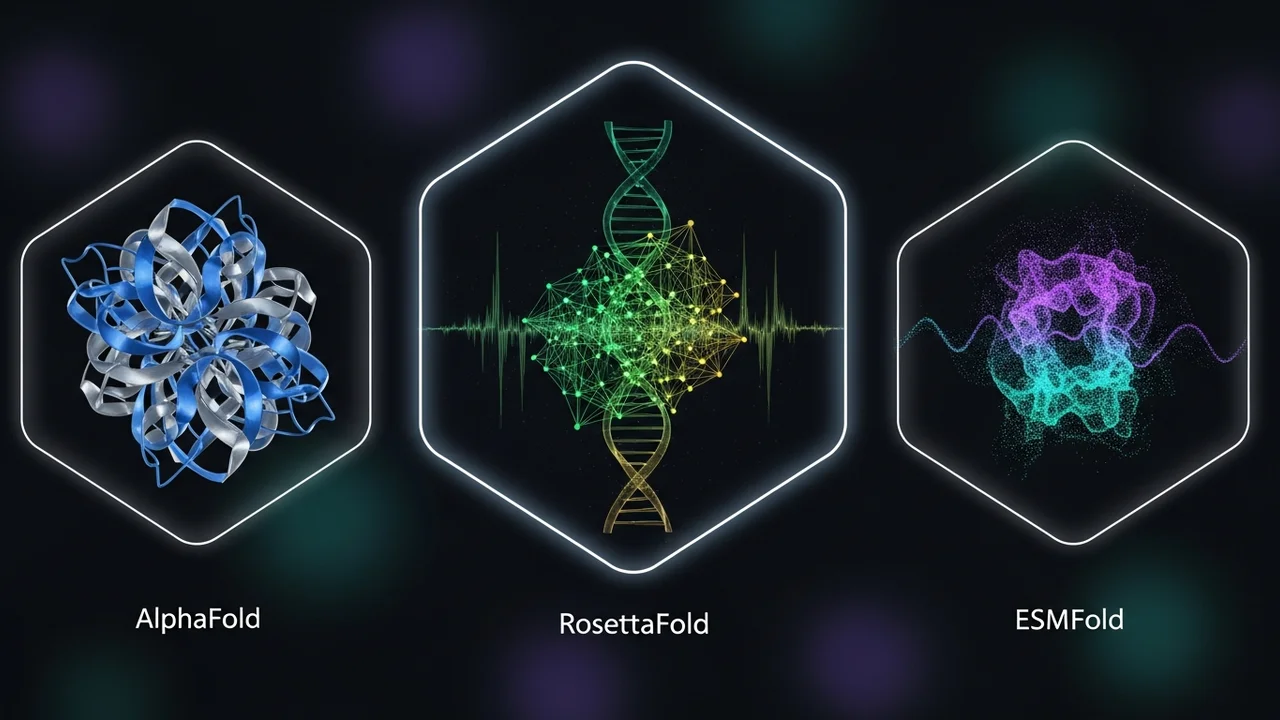
AlphaFold 2 by Google DeepMind for Structural Biology
When we talk about the king of the hill, it is definitely AlphaFold 2. Developed by DeepMind, this model basically turned the scientific community upside down when it hit the scene. It uses a deep learning architecture that predicts the 3D structure of a protein based solely on its amino acid sequence. It is incredibly accurate, often matching the precision of experimental methods like X-ray crystallography.
In terms of usage, researchers use AlphaFold 2 to map out proteins that were previously considered "dark matter" in biology. If you are working on a new drug, you need to know the shape of the target protein to see if your molecule will fit. AlphaFold 2 gives you that blueprint instantly. As for pricing, DeepMind has made the database open-access for the scientific community, which is a huge win for researchers everywhere. You can access the predictions via their web portal or download the code from GitHub if you have the computational power to run it yourself.
RoseTTAFold by University of Washington for Protein Design
Next up is RoseTTAFold. While AlphaFold 2 is the heavy hitter for structure prediction, RoseTTAFold is a favorite for those who want to get their hands dirty with protein design. It is a "three-track" neural network that simultaneously considers information about the 1D sequence, the 2D distance between amino acids, and the 3D coordinates. This makes it exceptionally good at understanding how different parts of a protein interact.
People love RoseTTAFold because it is a bit more flexible for custom research tasks. If you are trying to design a brand-new protein from scratch—say, a synthetic enzyme that eats plastic—this is the tool you want in your toolkit. It is also open-source, meaning you can integrate it into your own lab’s pipeline without paying hefty licensing fees. It is a bit more "DIY" than AlphaFold, but for many biotech startups, that is exactly what they need.
ESMFold by Meta AI for High Throughput Analysis
Then we have ESMFold, which comes from the team at Meta AI. This one is a bit different because it is based on a Large Language Model (LLM) approach. Instead of looking at evolutionary history like the other two, it treats protein sequences like sentences in a language. It has "read" millions of protein sequences and learned the "grammar" of how they fold.
The biggest advantage here is speed. ESMFold is significantly faster than AlphaFold 2. If you have a massive library of millions of protein variants and you need to screen them all in a weekend, ESMFold is your best friend. It is perfect for high-throughput screening in drug discovery. Meta has also made this accessible through their ESM Metagenomic Atlas, which is a massive resource for anyone looking to explore the protein universe without needing a supercomputer in their basement.
Comparing the Top AI Protein Folding Tools
So, which one should you pick? It really depends on your specific goal. If you need the absolute highest accuracy for a single, critical protein structure, AlphaFold 2 is still the gold standard. If you are into protein engineering and want to design new structures, RoseTTAFold offers a more collaborative and flexible environment. And if you are dealing with massive datasets and need results yesterday, ESMFold’s speed is unbeatable.
In terms of cost, all three are currently accessible to the research community for free or via open-source licenses, which is great news for smaller biotech firms. However, the real cost comes in the form of cloud computing. Running these models requires serious GPU power. Most companies end up paying for AWS or Google Cloud instances to run these models at scale. Depending on your volume, you could be looking at anywhere from a few hundred to several thousand dollars a month in compute costs. It is a small price to pay, though, when you consider that these tools can shave years off the drug development timeline.
It is truly an exciting time to be in biotech. These models are not just academic toys; they are being used right now to develop treatments for everything from Alzheimer's to rare genetic disorders. As these models get even better, we are going to see a massive shift in how we approach medicine, moving from trial-and-error to precision design. Keep an eye on these three, because they are the ones driving the future of the industry.
:max_bytes(150000):strip_icc()/277019-baked-pork-chops-with-cream-of-mushroom-soup-DDMFS-beauty-4x3-BG-7505-5762b731cf30447d9cbbbbbf387beafa.jpg)