3 Top AI Drug Design Databases
Compare the 3 most comprehensive AI-ready databases for drug design research.
3 Top AI Drug Design Databases
Compare the 3 most comprehensive AI-ready databases for drug design research.
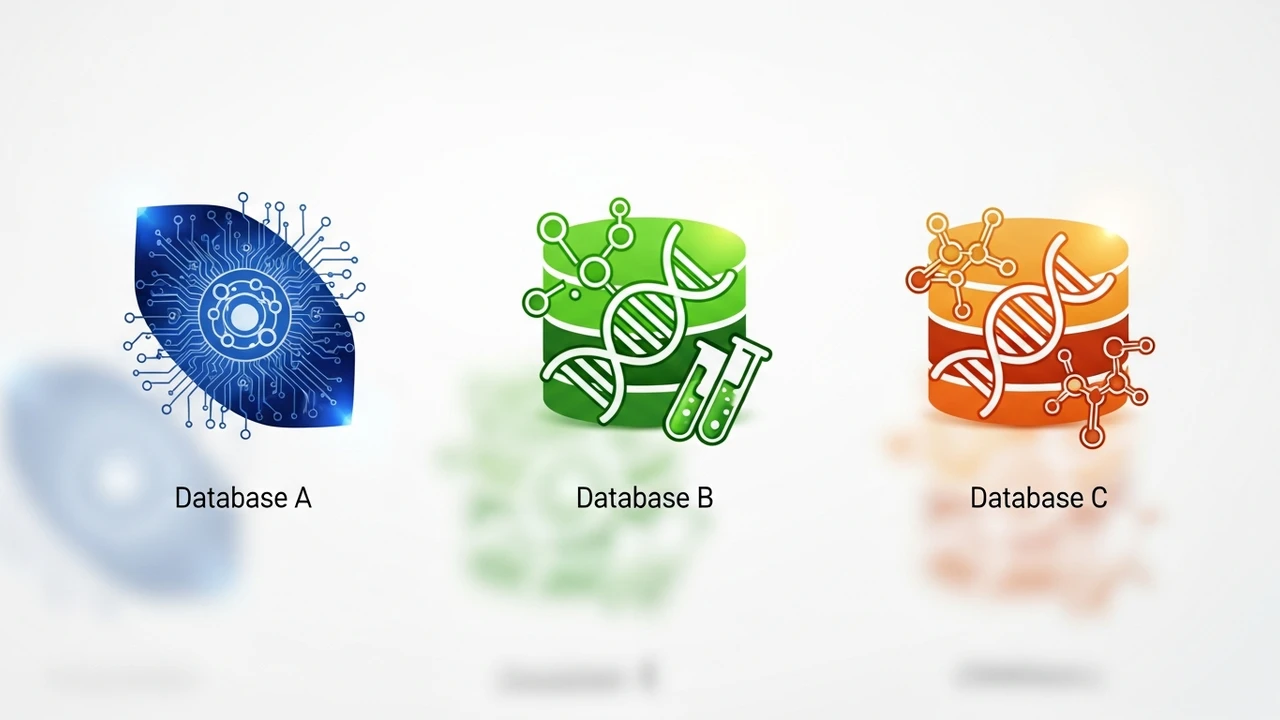
If you are diving into the world of AI-driven drug discovery, you already know that the quality of your model is only as good as the data you feed it. Finding clean, structured, and machine-learning-ready datasets is often the biggest hurdle for researchers and biotech startups. Whether you are working in the US or expanding into the Southeast Asian biotech market, having access to high-quality chemical and biological data is non-negotiable. Today, we are breaking down the top three databases that are currently powering the most successful AI drug design pipelines.
ChEMBL The Gold Standard for Bioactivity Data
ChEMBL is arguably the most famous database in the medicinal chemistry world. Managed by the European Bioinformatics Institute, it is a massive, manually curated database of bioactive molecules with drug-like properties. For AI researchers, ChEMBL is a gold mine because it links chemical structures to biological targets and clinical data.
When you use ChEMBL, you are getting access to millions of compound records. The primary use case here is training deep learning models for Quantitative Structure-Activity Relationship (QSAR) tasks. If you want to predict whether a new molecule will bind to a specific protein, ChEMBL provides the ground truth you need. It is free to use, which makes it incredibly popular for academic research and early-stage startups. However, the sheer volume of data can be overwhelming, so you will need a robust data engineering pipeline to clean and filter it for your specific project.
ZINC20 The Massive Virtual Screening Library
If ChEMBL is about bioactivity, ZINC20 is about sheer scale. This database is designed specifically for virtual screening. It contains billions of purchasable compounds, which is a game-changer when you are trying to identify potential drug candidates from a massive chemical space.
The beauty of ZINC20 lies in its accessibility. It provides 3D structures that are ready for docking simulations. For AI drug design, this is critical because you can use these structures to generate training data for generative models. Imagine you are building a GAN (Generative Adversarial Network) to create new drug-like molecules; ZINC20 provides the perfect distribution of 'drug-like' space to ensure your model doesn't generate nonsense. While it is free, the computational cost of processing billions of molecules is high, so most teams use it in conjunction with cloud-based high-performance computing.
PDBbind The Essential Resource for Protein Ligand Complexes
When you move from simple 2D chemical structures to 3D protein-ligand interactions, PDBbind becomes your best friend. This database collects experimental binding affinity data for protein-ligand complexes found in the Protein Data Bank (PDB).
Why does this matter for AI? Because modern drug design is increasingly focused on structure-based drug design (SBDD). If you are training a model to predict binding affinity based on the 3D shape of a protein pocket and a ligand, PDBbind is the standard benchmark. It is smaller than ChEMBL or ZINC, but the quality of the data is much higher because it is tied to specific structural coordinates. Most researchers use PDBbind to fine-tune their models after pre-training on larger, noisier datasets. It is an essential tool for anyone serious about precision medicine.
Comparing the Databases for Your Pipeline
Choosing the right database depends on your specific AI architecture. If you are doing ligand-based design, ChEMBL is your go-to. If you are doing large-scale virtual screening, ZINC20 is the winner. If you are doing structure-based design, PDBbind is the only way to go. Many top-tier biotech firms actually combine all three: they use ZINC20 to generate candidates, ChEMBL to filter for bioactivity, and PDBbind to validate the binding mechanism in 3D space.
Regarding costs, all three are primarily open-access, which is a huge benefit for the industry. However, the 'cost' comes in the form of infrastructure. You will need significant cloud storage and GPU power to process these datasets. For instance, running a full docking screen on the ZINC20 library can cost thousands of dollars in AWS or Google Cloud compute credits. When you factor in the engineering time to curate these datasets, the investment is substantial, but it is the price of admission for staying competitive in the AI drug discovery race.
As you build your platform, remember that data quality is a moving target. Always keep an eye on the latest updates from these databases, as they are constantly adding new experimental data that can significantly improve your model's predictive power. Whether you are in a lab in Singapore or a tech hub in Boston, these three resources are the foundation upon which the next generation of life-saving drugs will be built.
:max_bytes(150000):strip_icc()/277019-baked-pork-chops-with-cream-of-mushroom-soup-DDMFS-beauty-4x3-BG-7505-5762b731cf30447d9cbbbbbf387beafa.jpg)