4 Best AI ENT Diagnostic Tools for Hearing Loss
A guide to the 4 leading AI tools for ENT specialists to diagnose hearing loss and ear conditions accurately.
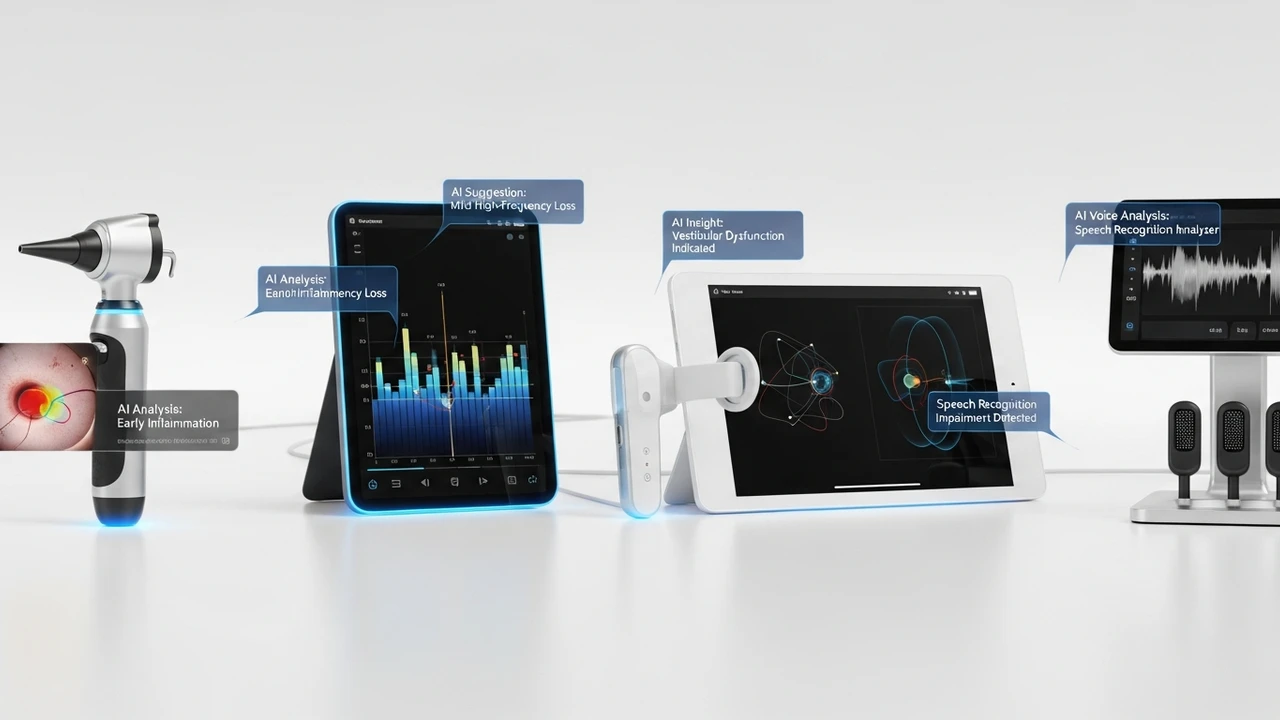
A guide to the 4 leading AI tools for ENT specialists to diagnose hearing loss and ear conditions accurately.
4 Best AI ENT Diagnostic Tools for Hearing Loss
If you are an ENT specialist or a clinic owner, you know that diagnosing hearing loss is often a time-consuming process that relies heavily on subjective patient feedback and manual audiometry. But things are changing fast. Artificial Intelligence is stepping into the audiology space, making screenings faster, more objective, and accessible to patients who might not have immediate access to a top-tier specialist. In this deep dive, we are going to look at the four best AI-powered ENT diagnostic tools that are currently shaking up the industry.
Understanding AI in ENT Diagnostics and Hearing Loss Screening
The integration of AI into ENT practices isn't just about fancy software; it is about precision. Traditional hearing tests often struggle with background noise interference or patient fatigue. AI algorithms, however, can filter out environmental noise and analyze frequency responses in real-time. By leveraging machine learning, these tools can identify patterns in auditory nerve responses that the human ear might miss. Whether you are in a bustling clinic in New York or a remote health center in Southeast Asia, these tools are designed to bridge the gap between initial screening and clinical intervention.
Top 4 AI ENT Diagnostic Tools for Hearing Loss
We have evaluated several platforms based on their diagnostic accuracy, ease of integration, and clinical utility. Here are the top four contenders:
1. OtoSet by Otoset
OtoSet is a game-changer for ear cleaning and initial diagnostic preparation. It uses automated suction technology combined with AI-driven visualization to clear earwax, which is a common culprit for temporary hearing loss. By ensuring the ear canal is clear, it allows for more accurate audiometric testing. It is priced around $5,000 to $8,000 depending on the package, making it a solid investment for high-volume clinics.
2. Shoebox Audiometry AI
Shoebox has effectively turned the tablet into a clinical-grade audiometer. Their AI-driven software monitors the testing environment for ambient noise, ensuring that the results are valid even if the room isn't perfectly soundproofed. This is perfect for mobile clinics or school screenings. The subscription model starts at roughly $200 per month, offering a low barrier to entry for smaller practices.
3. Eargo AI Integration
While Eargo is primarily known for its hearing aids, their diagnostic app uses AI to perform a quick hearing profile assessment. It is not a replacement for a full clinical exam, but it is an incredible tool for patient engagement. It helps patients understand their hearing loss in their own homes, which often leads them to book a formal appointment with an ENT. The devices themselves range from $1,500 to $3,000.
4. Auditory Insight Analytics
This platform focuses on the data side of things. It uses AI to analyze historical patient data and predict the progression of hearing loss. For an ENT, this means you can move from reactive care to proactive management. It is a B2B software solution, usually priced via enterprise licensing, often costing upwards of $10,000 annually for large hospital networks.
Comparing AI ENT Diagnostic Software Features and Clinical Use Cases
When you look at these tools side-by-side, the choice depends on your specific workflow. If you are doing high-volume screenings, Shoebox is your best bet due to its portability. If you are a surgical ENT, OtoSet helps you prepare patients for procedures more efficiently. The key difference lies in the data: some tools focus on the 'now' (screening), while others focus on the 'future' (predictive analytics). Most of these tools now offer cloud-based dashboards, allowing you to track patient progress across multiple locations, which is a huge plus for clinics expanding into the Southeast Asian market where centralized data management is becoming a priority.
Implementation Strategies for ENT Clinics and Hospitals
Adopting AI doesn't mean you need to overhaul your entire practice overnight. Start by identifying the biggest bottleneck in your current workflow. Is it the time spent on manual screenings? Or is it the lack of patient follow-up? Once you identify the pain point, pick one tool to pilot. For instance, integrating a tablet-based screening tool like Shoebox can free up your technicians to focus on more complex diagnostic tasks. Always ensure that the software you choose is HIPAA-compliant or meets the local data privacy regulations of your region, especially when dealing with sensitive patient health records.
Future Outlook for AI in Audiology and ENT Care
The future of ENT diagnostics is clearly moving toward remote monitoring. We are seeing a shift where patients will perform routine checks at home, and the AI will flag any significant changes to the ENT specialist. This 'tele-audiology' model is going to be massive in the next five years. As these algorithms get smarter, they will likely be able to distinguish between conductive and sensorineural hearing loss with near-perfect accuracy, further reducing the need for invasive or expensive diagnostic procedures. It is an exciting time to be in the field, and those who adopt these technologies early will undoubtedly have a competitive edge in providing better patient care.
:max_bytes(150000):strip_icc()/277019-baked-pork-chops-with-cream-of-mushroom-soup-DDMFS-beauty-4x3-BG-7505-5762b731cf30447d9cbbbbbf387beafa.jpg)