3 Top Tele-ICU Solutions for Hospitals
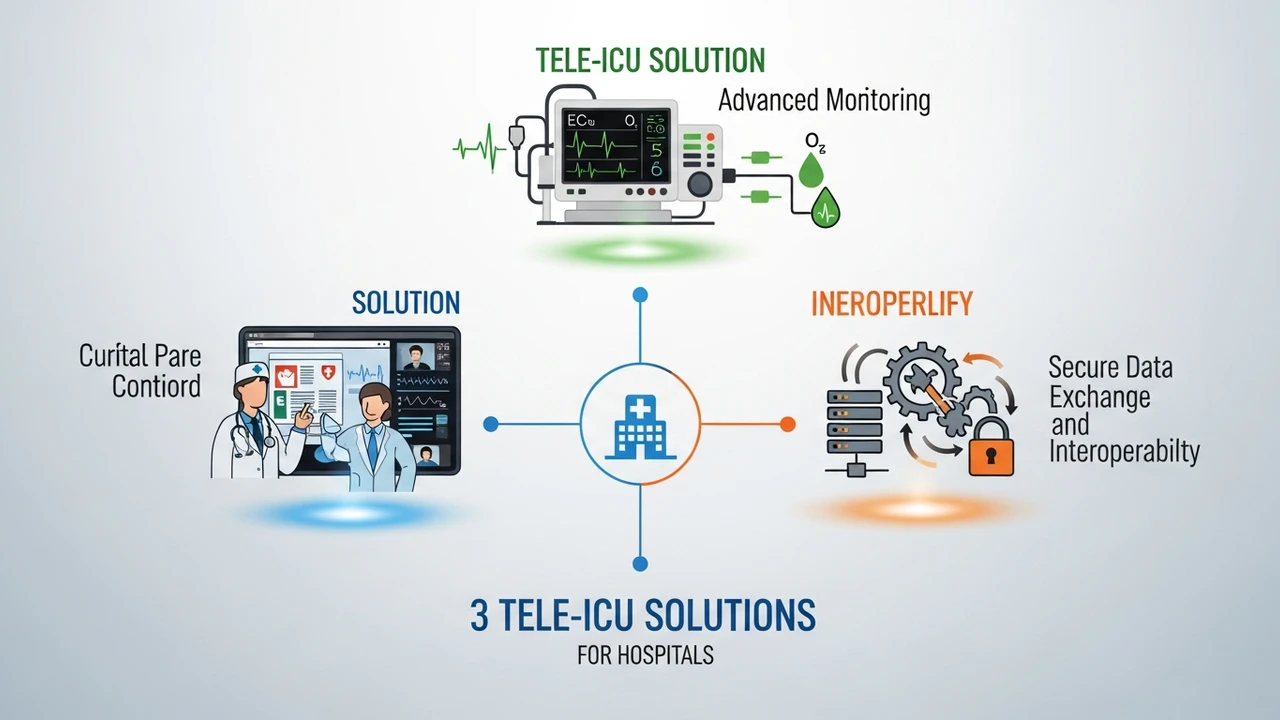
Review the 3 most effective tele-ICU solutions for remote critical care monitoring.
Review the 3 most effective tele-ICU solutions for remote critical care monitoring.
3 Top Tele ICU Solutions for Hospitals
If you have ever spent time in an Intensive Care Unit, you know it is a high-pressure environment where every second counts. For hospitals, especially those in rural areas or regions with a shortage of intensivists, the challenge of providing 24/7 expert care is massive. This is where Tele-ICU solutions come into play. By connecting bedside teams with remote specialists, these platforms are literally saving lives. Let’s dive into the top three solutions currently dominating the market.
Philips eICU Program for Remote Critical Care Monitoring
Philips is arguably the biggest name in this space. Their eICU program is a comprehensive, centralized platform that allows a single team of intensivists and nurses to monitor patients across multiple hospitals simultaneously. It uses predictive analytics to flag potential issues before they become emergencies. In terms of usage, it is perfect for large hospital networks that want to standardize care quality across different facilities. The interface is incredibly intuitive, providing a 'cockpit' view of patient vitals. When comparing it to others, Philips wins on sheer scale and integration capabilities. Pricing is typically enterprise-level, often requiring a significant upfront investment plus ongoing licensing fees, which can range from hundreds of thousands to millions depending on the number of beds.
GE Healthcare Mural Virtual Care Solution for ICU Efficiency
GE Healthcare’s Mural is another powerhouse. What makes Mural stand out is its focus on data visualization. It aggregates data from various bedside devices and presents it in a way that is easy to digest at a glance. It is particularly strong in managing respiratory care and ventilator settings, which has been a huge focus post-pandemic. If your hospital is looking for a solution that integrates seamlessly with existing GE monitoring hardware, this is your best bet. It is highly effective in high-acuity settings where clinicians need to make rapid decisions based on complex data streams. Pricing is usually structured as a subscription model, making it slightly more accessible for mid-sized hospitals compared to the massive Philips infrastructure.
Teladoc Health Critical Care Integration for Remote Specialist Access
Teladoc is known for its massive telehealth network, and their critical care integration is designed to bring specialists directly to the bedside via high-definition video and data sharing. Unlike the centralized monitoring hubs of Philips or GE, Teladoc is often used for 'on-demand' specialist consultations. It is the go-to for hospitals that don't need a full-time remote monitoring center but do need access to a neurologist or cardiologist at 3 AM. It is incredibly flexible and easy to deploy. The cost is generally lower in terms of hardware, often operating on a per-consult or monthly service fee basis, which is great for smaller clinics that need to scale their capabilities without a massive capital expenditure.
Comparing Tele ICU Platforms for Clinical Decision Support
When you look at these three, the choice really comes down to your hospital's specific needs. Philips is the 'heavy lifter' for large networks. GE Mural is the 'data master' for high-acuity monitoring. Teladoc is the 'agile partner' for on-demand specialist access. If you are a large urban hospital, you might lean toward Philips. If you are a regional center focusing on specific patient outcomes like ventilator weaning, GE is your friend. If you are a smaller facility just trying to bridge the gap between your generalists and specialists, Teladoc is the most practical path forward. Always consider the existing infrastructure you have—if you are already using GE monitors, adding Mural is a no-brainer. If you are starting from scratch, look at the total cost of ownership, including the training time for your nursing staff, which can be significant for all these platforms.
Future Trends in Remote ICU Monitoring and AI Integration
The future of these platforms is moving toward deeper AI integration. We are seeing more predictive algorithms that can detect sepsis or cardiac arrest hours before they happen. As these tools get smarter, the role of the remote intensivist will shift from 'monitoring' to 'proactive intervention.' We are also seeing more mobile-first approaches, where doctors can check on their ICU patients from a tablet or smartphone while on the go. The barrier to entry is dropping, and the technology is becoming more reliable. Whether you choose Philips, GE, or Teladoc, the goal remains the same: ensuring that the patient in the bed gets the best possible care, regardless of where the doctor is sitting.
:max_bytes(150000):strip_icc()/277019-baked-pork-chops-with-cream-of-mushroom-soup-DDMFS-beauty-4x3-BG-7505-5762b731cf30447d9cbbbbbf387beafa.jpg)