3 Top AI Small Molecule Discovery Tools
Review the 3 most effective AI tools for discovering small molecule drugs.
Review the 3 most effective AI tools for discovering small molecule drugs.
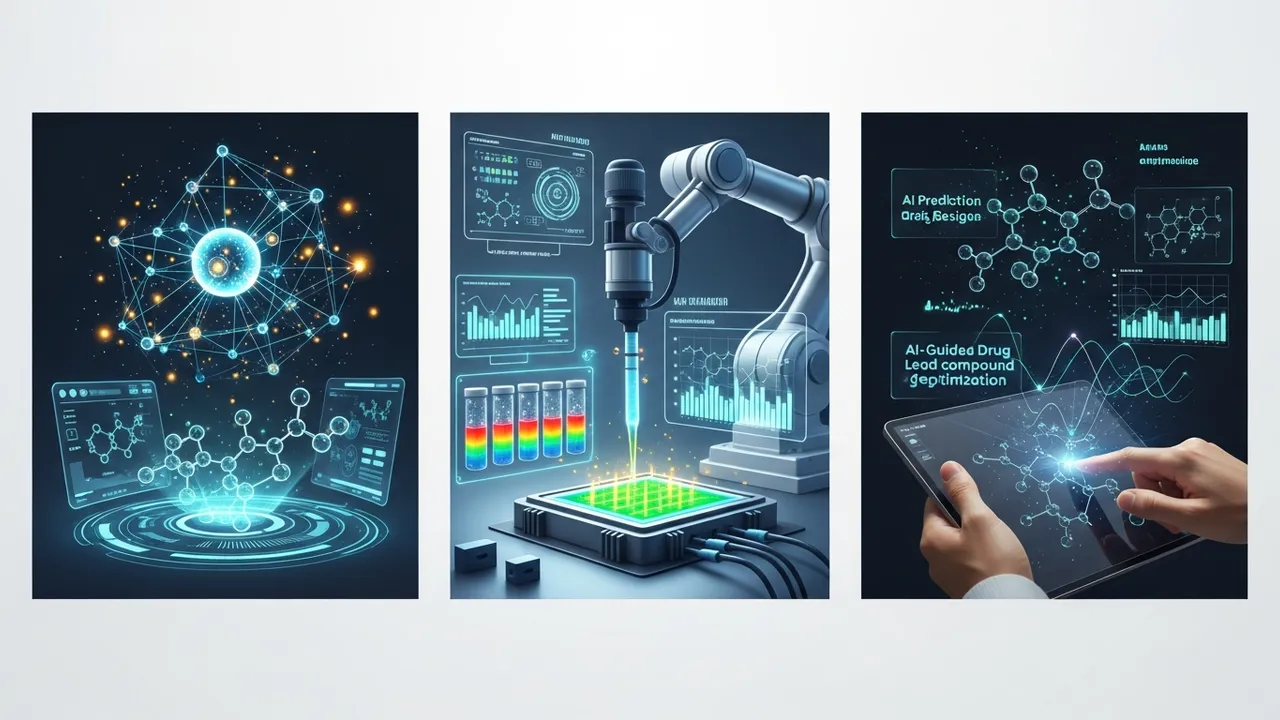
The landscape of pharmaceutical research is undergoing a seismic shift, and at the heart of this revolution lies the power of artificial intelligence in small molecule discovery. If you have been following the biotech space, you know that finding the right chemical compound to bind to a specific protein target is like looking for a needle in a haystack the size of the galaxy. Traditional methods are slow, expensive, and often hit dead ends. But today, we are looking at how AI is changing the game by predicting molecular behavior before a single test tube is even touched.
Understanding AI Small Molecule Discovery Platforms
When we talk about small molecule discovery, we are essentially talking about finding compounds that are small enough to enter cells and interact with biological targets. AI platforms now use deep learning, generative models, and physics-based simulations to screen billions of molecules in days rather than years. This isn't just about speed; it's about finding molecules that have the right 'drug-like' properties—meaning they are safe, stable, and effective.
Top 3 AI Tools for Small Molecule Research
Let's dive into the heavy hitters. These platforms are currently leading the charge in the US and Southeast Asian biotech markets.
1. Schrodinger Suite with FEP+
Schrodinger is arguably the gold standard in the industry. Their FEP+ (Free Energy Perturbation) technology is a beast when it comes to predicting binding affinity. It uses physics-based modeling combined with machine learning to tell you exactly how well a molecule will stick to its target. It is widely used by major pharma companies for lead optimization. In terms of pricing, it is an enterprise-level solution, often costing tens of thousands of dollars per seat annually, but for a lab looking to minimize wet-lab failures, the ROI is massive.
2. Insilico Medicine PandaOmics
If you want an end-to-end solution, PandaOmics is the one. It doesn't just look at the molecule; it looks at the disease target first. It uses generative AI to identify novel targets and then designs small molecules from scratch to hit those targets. It is incredibly popular in the Southeast Asian market because of its user-friendly interface and its ability to handle complex genomic data. Pricing is typically subscription-based, tailored to the size of the research pipeline.
3. Iktos Spaya
Iktos focuses on the 'synthesis' side of things. One of the biggest problems in AI discovery is designing a molecule that is actually possible to build in a lab. Spaya uses generative models to ensure that the molecules it proposes are synthetically accessible. It is a fantastic tool for medicinal chemists who are tired of AI suggesting 'impossible' molecules. It is generally more affordable than the massive enterprise suites, making it a great choice for mid-sized biotech firms.
Comparing These AI Discovery Solutions
Choosing the right tool depends on your specific bottleneck. If you are struggling with binding accuracy, go with Schrodinger. If you are at the very beginning of your project and need target identification, PandaOmics is your best bet. If your chemists are frustrated by molecules that can't be synthesized, Iktos Spaya will save your team hundreds of hours. Most labs in the US are now adopting a 'hybrid' approach, using one platform for target discovery and another for lead optimization.
Real World Use Cases and Implementation
Imagine you are working on a new oncology drug. You start with PandaOmics to identify a protein target that is overexpressed in tumor cells. Once you have the target, you feed that data into Schrodinger to screen a library of 10 million compounds. You narrow it down to 50 candidates. Finally, you run those 50 candidates through Iktos Spaya to make sure your lab team can actually synthesize them in the next two weeks. This workflow is becoming the standard for modern drug discovery, cutting the time from target to lead by nearly 60%.
Cost Considerations for Biotech Startups
Budgeting for these tools is tricky. Most of these companies do not list prices on their websites because they offer custom packages. For a small startup, expect to pay anywhere from $20,000 to $100,000 per year depending on the number of users and the depth of the modules you need. While that sounds like a lot, compare it to the cost of a single failed clinical trial or even a failed month of wet-lab synthesis. The math usually works out in favor of the software.
As we look toward the future, the integration of these tools will only get tighter. We are moving toward a world where the computer does the heavy lifting, and the scientists focus on the creative strategy of drug design. Whether you are in a high-tech lab in Singapore or a startup hub in Boston, these tools are no longer optional—they are the foundation of the next generation of medicine.
:max_bytes(150000):strip_icc()/277019-baked-pork-chops-with-cream-of-mushroom-soup-DDMFS-beauty-4x3-BG-7505-5762b731cf30447d9cbbbbbf387beafa.jpg)