3 Top AI Infectious Disease Screening Tools
Evaluate the 3 most effective AI tools for screening infectious diseases in high-traffic clinical environments.
3 Top AI Infectious Disease Screening Tools
Evaluate the 3 most effective AI tools for screening infectious diseases in high-traffic clinical environments.
If you have ever walked through a busy international airport or a crowded metropolitan hospital during flu season, you know the chaos that comes with trying to identify who might be carrying an infectious disease. It is a massive challenge, but thanks to recent breakthroughs in artificial intelligence, we are finally getting some high-tech help. Today, we are diving into the world of AI-driven infectious disease screening. We are looking at how these tools work, which ones are actually worth your time, and how they are changing the game for clinics and public health officials alike.
Understanding AI Diagnostic Tools for Infectious Disease Screening
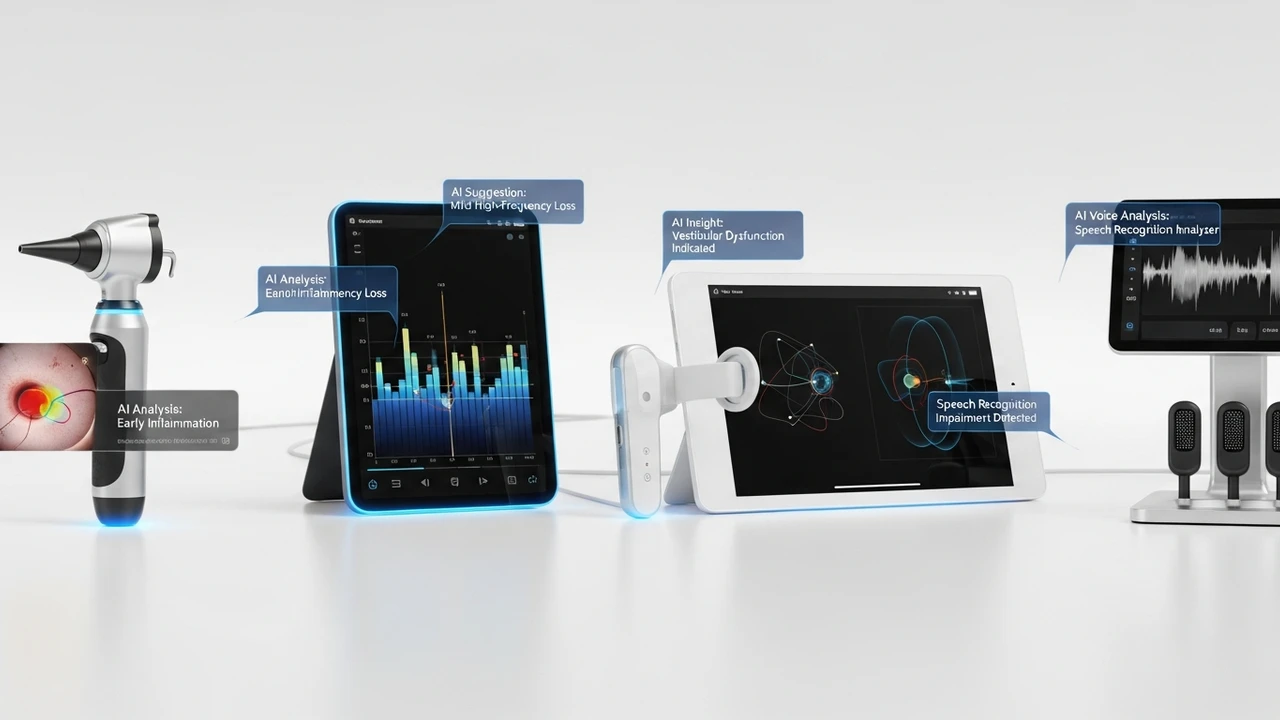
When we talk about AI in this space, we are really talking about pattern recognition on steroids. These systems ingest massive amounts of data—think thermal imaging, cough audio analysis, and even rapid blood biomarker scans—to flag potential infections before a human doctor even gets a chance to look at the patient. In high-traffic areas like emergency rooms or transit hubs, this speed is everything. It is not just about catching a virus; it is about stopping the spread before it starts.
Top 3 AI Infectious Disease Screening Platforms Compared
Let’s break down the heavy hitters. We have selected three platforms that are currently leading the charge in the US and Southeast Asian markets: BioSense AI, PathoScan Pro, and FeverGuard Analytics.
BioSense AI for Real Time Symptom Monitoring
BioSense AI is essentially a multi-modal powerhouse. It uses a combination of high-resolution thermal cameras and AI-driven respiratory analysis to detect early signs of fever and abnormal breathing patterns. It is widely used in hospitals in Singapore and the US to screen patients at the door. The interface is incredibly intuitive, and it integrates directly with existing hospital information systems. Pricing usually starts around $15,000 per unit, depending on the scale of the deployment.
PathoScan Pro for Rapid Biomarker Analysis
If you need something more clinical, PathoScan Pro is the go-to. This tool focuses on rapid diagnostic testing (RDT) data. It uses machine learning to interpret the results of lateral flow assays in seconds, removing the human error that often comes with reading test strips. It is perfect for clinics that handle hundreds of tests a day. You are looking at a subscription model here, typically costing about $500 per month per device, which includes cloud-based updates for new pathogen signatures.
FeverGuard Analytics for Large Scale Public Health
FeverGuard is designed for the big picture. It is less about the individual patient and more about population health. It aggregates data from thousands of sensors to identify potential outbreaks in real-time. It is a favorite for government health departments. Because it is a software-as-a-service (SaaS) platform, the pricing is tiered based on the number of connected nodes, often starting at $2,000 per month for a mid-sized city deployment.
Comparing Features and Use Cases for Clinical Environments
When you compare these, it really comes down to your specific environment. If you are running a hospital ER, BioSense AI is your best friend because it is passive—it screens people as they walk in without them needing to stop. If you are running a diagnostic lab, PathoScan Pro is the clear winner because it speeds up the actual testing process. For public health officials, FeverGuard is the only one that gives you the bird's-eye view you need to manage a crisis.
Implementation Challenges and Future Outlook
Of course, it is not all smooth sailing. Privacy is a huge concern. When you are using AI to scan people, you have to be incredibly careful about how that data is stored and who has access to it. Both the US and Southeast Asian markets have strict regulations, and any tool you choose needs to be fully compliant with HIPAA or local equivalents. Looking ahead, we expect these tools to get even smaller and faster. We are talking about smartphone-integrated screening that could eventually turn every phone into a personal health monitor. It is an exciting time to be in the biotech space, and these tools are just the beginning of a much larger shift toward proactive, AI-enabled healthcare.
:max_bytes(150000):strip_icc()/277019-baked-pork-chops-with-cream-of-mushroom-soup-DDMFS-beauty-4x3-BG-7505-5762b731cf30447d9cbbbbbf387beafa.jpg)