3 Top AI Drug Formulation Software
Evaluate the 3 most efficient AI tools for optimizing drug formulations.
Evaluate the 3 most efficient AI tools for optimizing drug formulations.
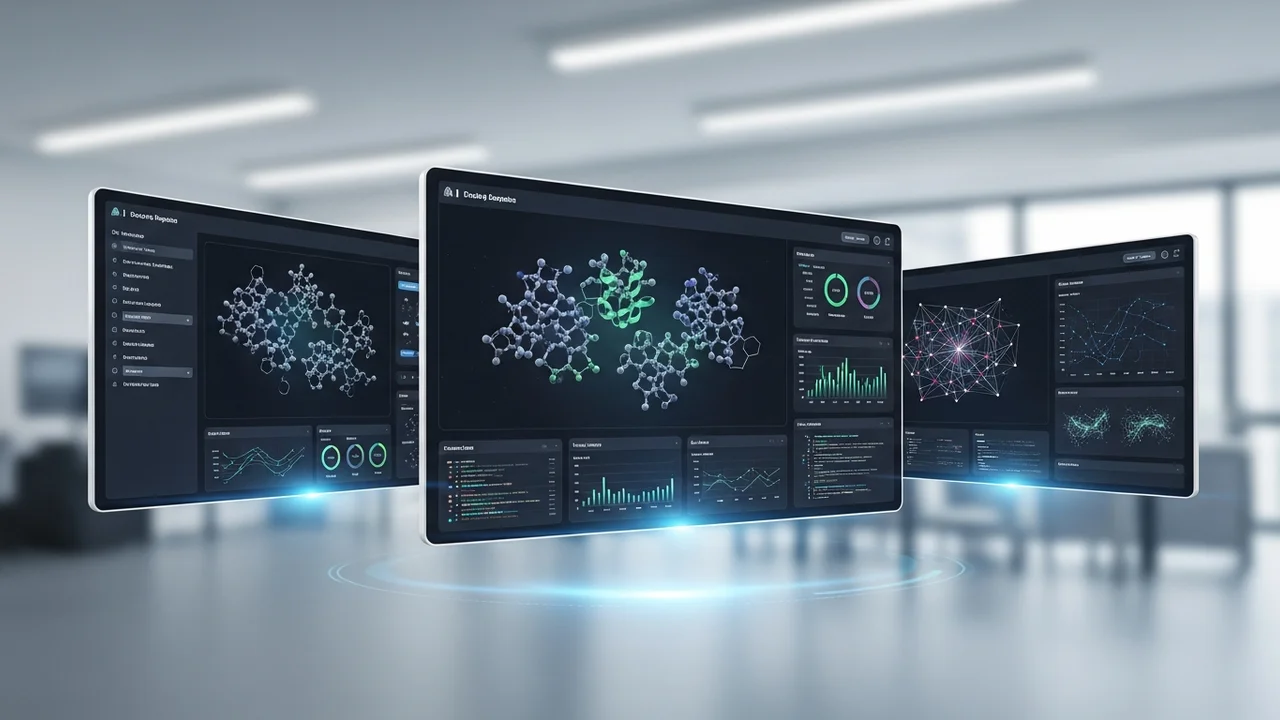
When you are deep in the trenches of pharmaceutical development, you know that the journey from a promising molecule to a stable, bioavailable drug product is often where projects hit a wall. It is not just about the chemistry anymore; it is about the physics of formulation, the stability of the delivery system, and the sheer complexity of excipient interactions. This is where AI-powered drug formulation software is changing the game, turning what used to be months of trial-and-error in the lab into a streamlined, data-driven process.
Understanding the Role of AI in Modern Drug Formulation
Traditionally, formulation scientists relied on their intuition, historical data, and a lot of physical bench work. You would mix a drug candidate with various excipients, put it in a stability chamber, and wait. If it failed, you started over. AI changes this by using machine learning models to predict how different chemical structures will behave under various conditions. These tools analyze vast datasets of past formulations to suggest optimal combinations, saving time and reducing the cost of raw materials. Whether you are working on oral solid dosages, injectables, or complex nanoparticle delivery systems, these platforms act as a force multiplier for your R&D team.
Top 3 AI Drug Formulation Software Platforms
If you are looking to integrate AI into your formulation pipeline, there are three standout platforms that are currently leading the market. Each has its own strengths, ranging from predictive modeling to automated experimental design.
1. Citrine Informatics
Citrine is arguably the gold standard when it comes to materials informatics, and their application in drug formulation is incredibly powerful. They use a proprietary AI engine that combines physical science with machine learning to predict the properties of new formulations. It is particularly good at handling sparse data, which is a common headache in early-stage development. You can input your desired target profile—say, a specific dissolution rate or shelf-life stability—and the software will suggest the best excipient ratios to achieve it.
Use Case: Ideal for complex solid-state formulations where you need to balance solubility and stability.
Pricing: Enterprise-level pricing, typically starting at $50,000+ per year depending on the scale of deployment.
2. Schrödinger (FEP+)
While Schrödinger is famous for its molecular discovery tools, their Free Energy Perturbation (FEP+) platform is a beast for formulation. It allows you to simulate the binding and stability of drug-excipient complexes at an atomic level. By understanding these interactions before you ever touch a pipette, you can avoid the most common pitfalls of drug degradation. It is highly technical and requires a team that understands computational chemistry, but the precision is unmatched.
Use Case: Best for high-stakes projects where you need to understand the molecular basis of formulation stability.
Pricing: Subscription-based, often bundled with their broader discovery suite, ranging from $30,000 to $100,000+ annually.
3. Kebotix
Kebotix takes a slightly different approach by integrating AI with self-driving lab technology. They don't just predict the formulation; they can actually help design the automated experiments to test them. Their platform is built for speed, allowing teams to iterate through hundreds of formulation candidates in a fraction of the time it would take manually. It is a fantastic choice for biotech startups that need to move fast and prove their concepts to investors.
Use Case: Perfect for high-throughput screening and rapid prototyping of new drug delivery vehicles.
Pricing: Custom quotes based on project scope and lab integration requirements.
Comparing AI Formulation Tools for Your Lab
Choosing the right tool depends entirely on your specific needs. If you are a large pharma company with a massive historical database, Citrine is likely your best bet because it excels at learning from your existing data. If you are focused on the fundamental physics of how a drug interacts with its environment, Schrödinger is the clear winner. For those who are building a lab from scratch and want to embrace automation, Kebotix offers the most modern, integrated approach.
One thing to keep in mind is the learning curve. These tools are not "plug and play." You need a team that can interpret the AI's suggestions and translate them into actionable lab protocols. The cost of these platforms is significant, but when you consider the cost of a failed clinical trial due to poor formulation, the ROI becomes very clear. Most of these companies offer pilot programs, so I highly recommend running a small, "blind" test where you give them a past formulation project and see if their AI can match or improve upon your historical results.
The landscape of drug development is shifting toward a digital-first approach. By leveraging these AI tools, you are not just making your lab more efficient; you are ensuring that your drug candidates have the best possible chance of making it to the patients who need them. It is an exciting time to be in the industry, and the gap between those using AI and those sticking to traditional methods is only going to widen in the coming years.
:max_bytes(150000):strip_icc()/277019-baked-pork-chops-with-cream-of-mushroom-soup-DDMFS-beauty-4x3-BG-7505-5762b731cf30447d9cbbbbbf387beafa.jpg)